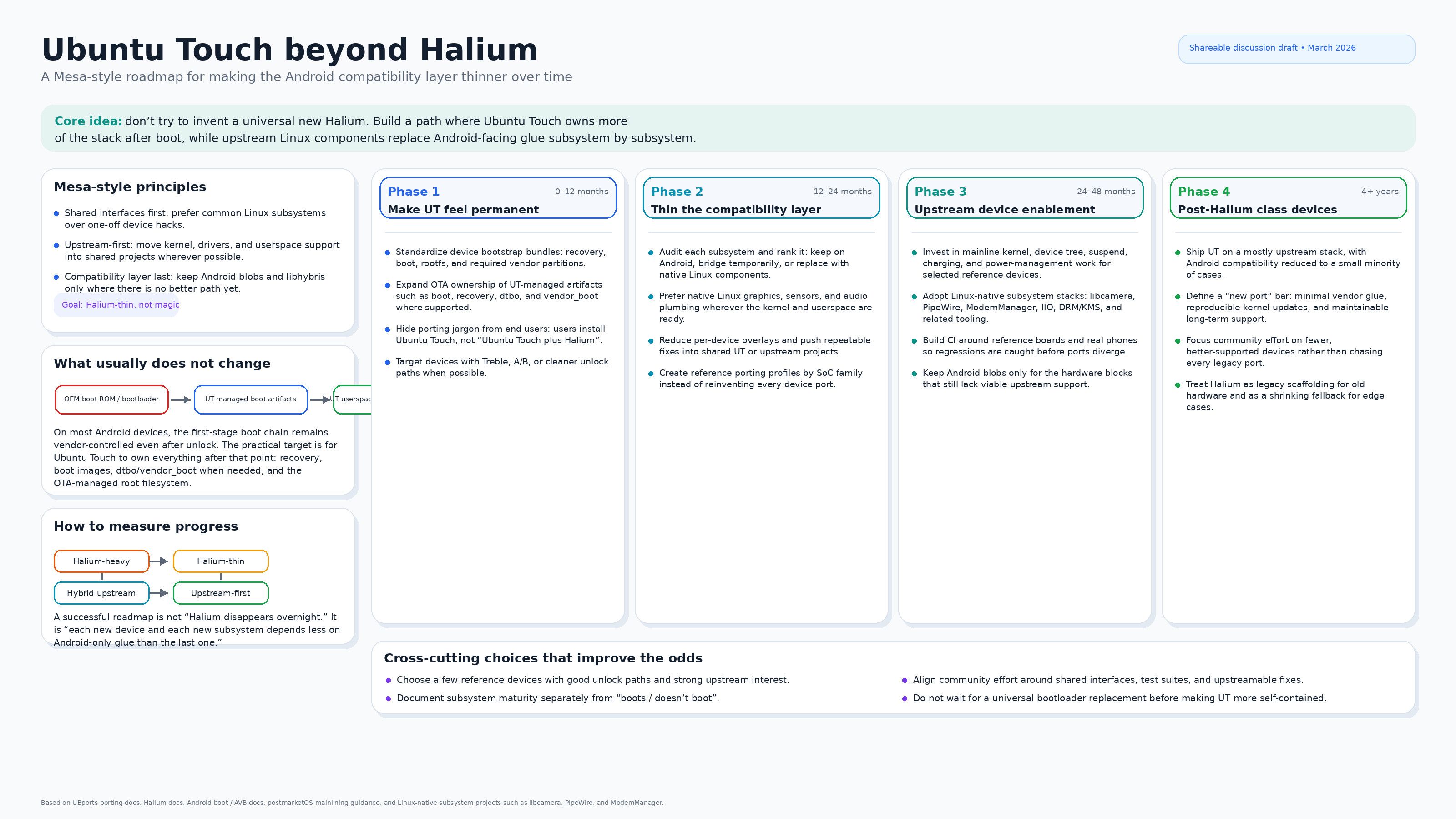
-
@developerbayman That's already possible on mainline devices but it's not trivial on devices without mainline which is most of the devices. And even if they do, many things don't work.
Not sure what your realistic expectation on this

-
@kugiigi well if its already being addressed ....but no i was inspired by the mesa project and was thinking why not a four year plan like wise? ....the information surrounding this whole project is quite vast and very hard to keep up with lol
-
but the expectation is to totally eliminate halium for all future devices ...but yeah just random inspiration
-
@developerbayman You can check the postmarketOS project to see how realistic it would be for UT to ditch halium.
-
@grenudi originally i was mobian for example ....but it was in the same state as UT in lots of ways also many projects dont support my device ...also i see ubuntu touch as a garden ....its just needs watering ...and actually i find clickable development daunting ....but regardless something about "here" rubs me right ubuntu touch can be very great with l;ots of care and love ..and some convention tweaks ...also in some ways UT is more mature than some of those other projects IMO ...little things
-
@grenudi thanks man! ...and cool yeah i was sitting there and im like ? i wonder?? ...so cool i dont mind being late to the party lol
-
@grenudi totally what im proposing total rewrite from the ground up ....ill need to hit the books
-
@grenudi lol ill take it though i started programming when i was nine i am 43 now ...so for most of my life i had to bang my head on syntax ...now i can simply stop the headache and run it through a LLM ...HOWEVER... it is NOT a END all beat all .....if your not careful things can go off the rails very quickly or you will get garbage ......but thank god long gone are the days of "iv been stuck on why this function hasnt worked for the last six months!" ....thank god!!! and good riddance!!
-
@grenudi Which projects ditch halium?
-
@kugiigi im just guessing but i would think like pixels and other phones where the drivers are not on lock ...i dont actually know tho
-
@developerbayman I only know Droidian and UT. I don't know any other projects that use Halium and has actual daily driver users.
postmarketOS has always been about mainlining mobile devices so it's not that.
-
@kugiigi yeah i dont know either ....to bad we couldnt simply design our own phone specifically for the project like midrange ....actually didnt they do that already? ...i know eventually im working off and on on porting UT to the orange pi 5 thing will become more interesting at that point i think ...one distro at a time i suppose lol
-
@kugiigi Furi-os uses Halium. Many daily driver users. Using the dual boot feature, UT makes a good daily driver as well.
-
@DenMoore Isn't FuriOS use like Debian + Phosh?
But yeah, Halium exists so we can have usable alternative OSes without having to go through the rigorous process of mainlining every device. Mainline is much better but not realistic to get something usable immediately. -
@kugiigi Not precisely, it's a Mobian fork.
-
@DenMoore Isn't FuriOS use like Debian + Phosh?
But yeah, Halium exists so we can have usable alternative OSes without having to go through the rigorous process of mainlining every device. Mainline is much better but not realistic to get something usable immediately.Or within any reasonable time frame, unfortunately. The OnePlus 6 is probably as far back as I'd stretch "reasonable," and it's on the tail end of "reasonable," being ~7 (8?) years old at this point. It's extremely unfortunate.
FuriOS is Phosh on top of Debian base, yes, probably with some other stuff to make the phone work as well.
-
@grenudi ewww subscriptions??? ...no no i run my own custom AI on my own machine on my own custom operating system ....i might use chatgpt if i need to research something but really my AI takes care of it ....for me its all about what ui is closer if im in the zone on a project ....my AI is setup mostly voice control so i tend to use it for file operations mostly ....when i do feed AI code i try to limit the amount at a time so it does not go off the rails i like progress not regression
-
if anyone is dogging the use of a modern tool to make software development easier ....they DO NOT KNOW THE STUGGLE!!! .....at the end of the day i find it offends peoples ego ...then the talk about "replacment" ...i get it ....but the truth is nothing in this world lives up to its hype .....give AI your whole project and see how quickly you go from "almost" to ....shit do i have a backup copy of the project anywhere? ...lol learned all this the hard way ....im 43 ...the government stole my retirement plan ...so my thinking is harness AI and play catch up
-
@grenudi its what i was going for ....when i get the build running ill prob post a link in off topic where i was already talking about it eventually you will get to try it if you want ....only issue ...the iso file is gonna be around 17 to 24 gb ...all i can say is its big ...but super advanced if i hurry ill be the first to release a fully agentic operating system lol unofficially i broke like 4 world records in this as far as i know
...but nobody is paying attention -
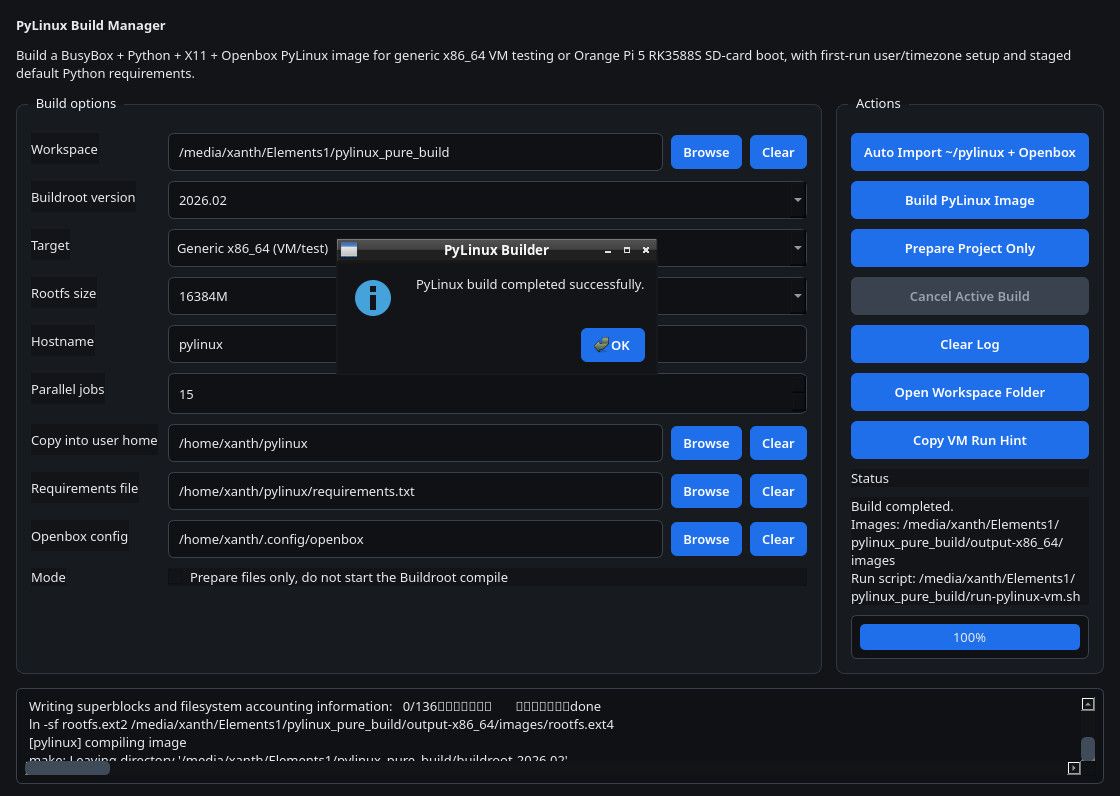
@grenudi as of ten minutes ago this is where i am with that actually



Hello! It looks like you're interested in this conversation, but you don't have an account yet.
Getting fed up of having to scroll through the same posts each visit? When you register for an account, you'll always come back to exactly where you were before, and choose to be notified of new replies (either via email, or push notification). You'll also be able to save bookmarks and upvote posts to show your appreciation to other community members.
With your input, this post could be even better 💗
Register Login