-
Well I guess this type of gouvernemental organization will not be interested in individual feedback of individual, but it is consulting some associations, so with a lot of luck fondations like Ubports might have a word to say.
-
Shouldn't this franco-frenchy thread better be in https://forums.ubports.com/category/133/french-francais section of the forum ?
-
@Keneda I think this is of general interest, at least for all European Union countries. We all suffer from the imposition by public authorities of services/procedures which can only be done in Android/IOS devices, sometimes even requiring non-rooted devices. If a private firm does it, well, it's their choice and we can choose not to buy from them, but if a government does it it's affecting our freedom.
-
French
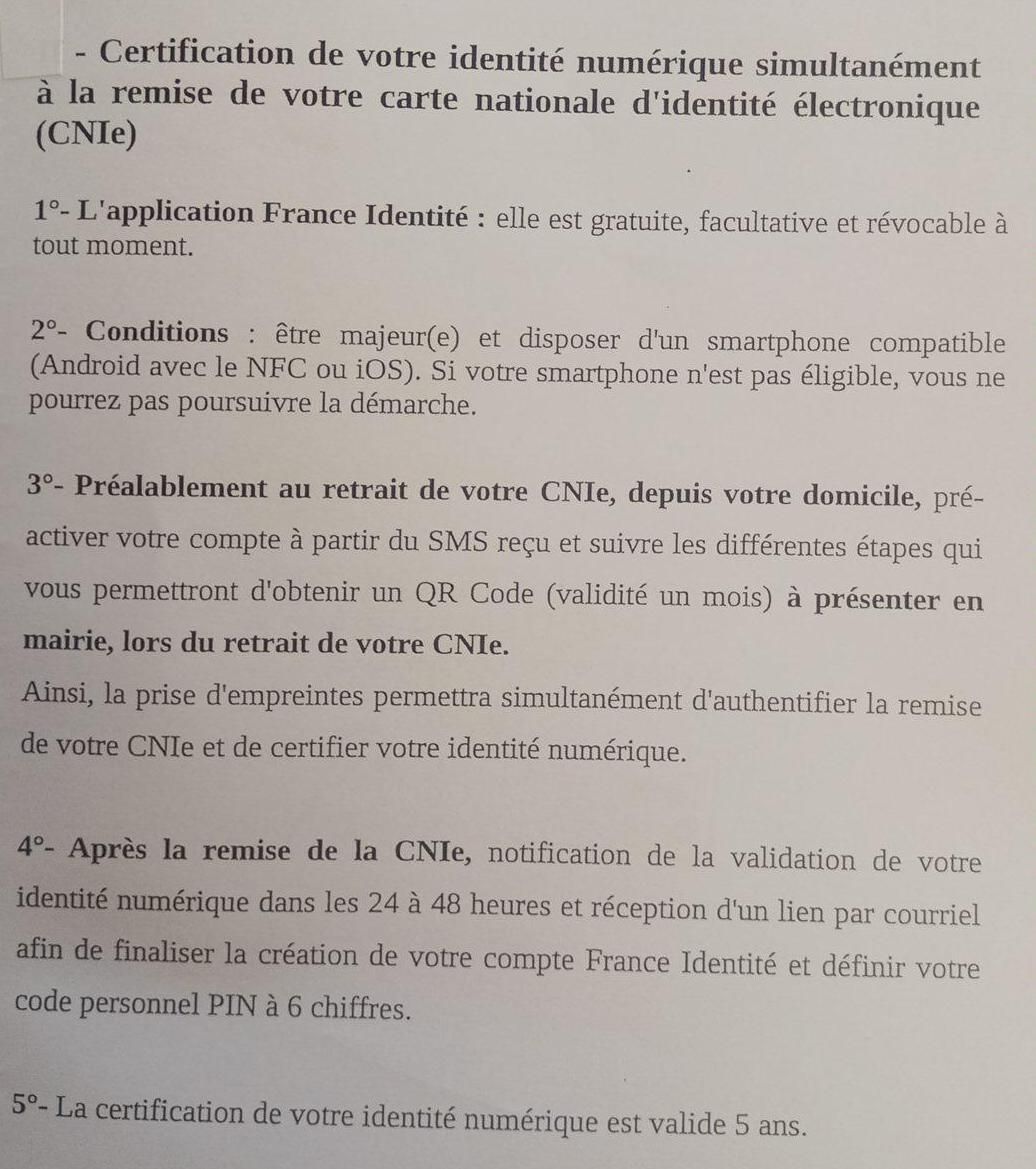
-
@domubpkm for shure... but if nobody demand for, they will never work to adapt an other OS.
the more we ask for it, the more the work on it. -
@DJac For that, I don't believe it. Community too small. No point wasting development and maintenance resources. All this comes at an unprofitable cost. The first step for institutions to think about it would be for the OS to be distributed pre-installed on a large scale.
Personal opinion. -
@domubpkm said in French ID app interoperability.:
@DJac For that, I don't believe it. Community too small. No point wasting development and maintenance resources.
I do not agree:
-
First because interoperability is a legal requirement for public services, especially those supposed to be universal like ID. And they replied to me that they agreed on the goal of interoperability, were sorry about the issue, and were looking for solutions. ( https://eur-lex.europa.eu/eli/reg/2024/903/oj/eng )
-
Second because the french gouvernement is currently actively trying to reduce its dependency to foreign company (see above), in this case Apple, and Google who would have monopoly over a strategic state function as vital as identity, if this were to become a central way to verify identity.
-
Third because they don't need to develop a solution specific for Ubuntu Touch: they can release an App based on Qt framework, that with principally the same code will work on Windows, Mac, Linux Desktop, Android, iOS, and all Linux Mobile distributions (Ubuntu Touch, Mobian, postmarkeOs, SailfishOs, ect...); or even they can make a progressive webapp that nowadays can be compatible with NFC and will be universally compatible.
If we feel defeated before we even start the fight, or even send a short email, we will probably not go very far.
Edit: "The first step for institutions to think about it would be for the OS to be distributed pre-installed on a large scale. " -> On the other hand they will probably not do that because the state does not like this role to have direct influance on markets and choices of consumers.
-
-
@domubpkm
Why would french (and European ?) banks have the obligation to provide smartphone agnostic solution for online banking payment security, and institutional agencies not ?https://www.caisse-epargne.fr/comptes-cartes/securisez-vos-moyens-de-paiement-sur-internet/
Réaliser les deux saisies d’informations suivantes : le code reçu par SMS puis votre mot de passe de Banque à distance.
-
@pparent I do not question any of these rational arguments
 ..
.. -
@pparent Thanks for posting that article, I hadn't heard.
Low probability of success can be offset by low cost and high value of success.
I think the moment we're in presents opportunity like never before. In addition to the French government looking at digital sovereignty, the Danish government is trying to get away from American tech companies. I could imagine many other governments may be considering this.We don't have the interoperability rules here in Canada, but I'm still going to be suggesting to my member of parliament and a couple of ministers that the government should be proactive in examining and acting on the threat posed by the fact that most members of our government, military, and general populace use privacy-intrusive smartphone OSes controlled by a couple USA-based tech companies whose CEOs have already demonstrated a willingness to comply with what increasingly demonstrates itself to be an aggressive and authoritarian government.
(I respect the forum's rules about not getting political and hope this didn't cross any lines, but I think what I said is factual and relevant to the point I'm making. I'm not taking a position here on whether annexation is cool, just trying to explain why I think there's an opportunity for UT.)Matrix has benefited from being adopted by various governments and militaries, even if in pilot projects. The challenge is much greater with mobile OS adoption, but if the resources and the need are there, it doesn't seem impossible.
My government, for example, is suddenly trying to spend vastly more than ever before on the military and routinely falls short of its spending targets. I could make the argument that a secure, private and functional mobile OS is of strategic military importance
And I will! Opportunities like this don't always last very long.